
Stopped at a DUI Checkpoint in New Jersey? What Happens If Police Suspect DWI?
August 29, 2026
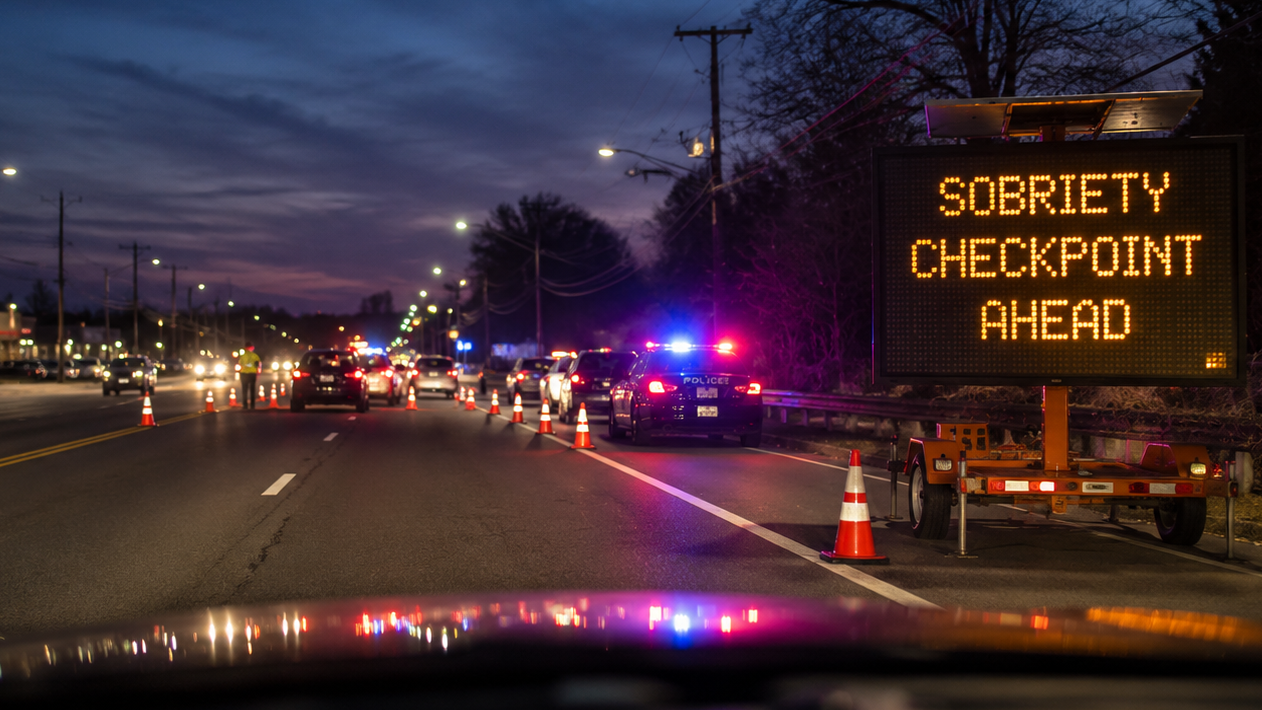
You are driving home when traffic slows, and you see cones, patrol cars, and officers directing vehicles through a checkpoint.
An officer approaches your window, asks where you are coming from, and watches how you respond. The conversation lasts only a few moments before you are told to pull into a secondary area and step out of the vehicle.
What began as a routine sobriety-checkpoint stop has turned into a DWI investigation.
That change can happen quickly. Reaching a checkpoint does not mean police already suspect you of driving while intoxicated. But if an officer observes signs that point to possible impairment, the encounter can move from a brief screening to additional questioning, field sobriety testing, arrest, and post-arrest breath testing.
If you are arrested after one of those stops, understanding how the encounter developed can be just as important as the breath-test result or other evidence police rely on.
Can Police Stop You at a DWI Checkpoint Without Suspecting You of Anything?
At an ordinary traffic stop, police generally need a lawful reason to stop a particular vehicle.
A properly conducted sobriety checkpoint works differently.
New Jersey courts have upheld properly conducted sobriety checkpoints even when police do not have individualized suspicion about each driver who is stopped. Whether a checkpoint is lawful depends on factors such as how the location and timing were selected, the involvement of supervisory officials, and whether officers followed neutral procedures designed to limit arbitrary discretion.
Those safeguards are important because a sobriety checkpoint cannot simply become an unrestricted opportunity to stop drivers and investigate them.
Checkpoint enforcement is especially relevant in late summer. New Jersey’s 2026 Drive Sober campaign runs from August 19 through Labor Day on September 7, with increased impaired-driving patrols and sobriety checkpoints across the state.
If you are later arrested for DWI, however, the legality of the checkpoint is only the first question.
The next is what gave police a reason to focus the investigation on you.
What Can Turn a Checkpoint Stop Into a DWI Investigation?
The initial interaction at a checkpoint is often brief.
During those first moments, an officer is paying attention to more than your answers.
Police can consider the smell of alcohol, your speech and coordination, how you respond to questions or directions, admissions about drinking, the presence of an open container, and other circumstances that point to possible impairment.
An officer can also ask where you were coming from, whether you had been drinking, or when you last consumed alcohol.
If the circumstances create reasonable suspicion of impaired driving, the officer can continue the investigation rather than simply allowing you to drive away.
That is the point where a general checkpoint stop becomes an investigation focused specifically on whether you were driving while impaired.
What Happens During the Roadside DWI Investigation?
Once the investigation expands, the officer can ask you to step out of the vehicle and perform field sobriety tests.
During these tests, officers look at balance, coordination, the ability to follow instructions, and performance on specific tasks.
The officer’s interpretation of those tests can become part of the State’s case.
But a notation in a police report that someone “failed” or performed poorly does not tell the entire story.
The conditions surrounding the tests can matter. Road surface, traffic, lighting, weather, footwear, physical limitations, and the instructions given by the officer can all provide important context for how a driver’s performance is interpreted.
Video can be particularly important.
Body-camera or patrol-car recordings can show how instructions were delivered, how you actually moved and spoke, and whether the written report accurately reflects what happened.
Your statements can matter as well. What you said about drinking, where you had been, or when you last consumed alcohol can become part of the evidence police rely on when deciding whether to make an arrest.
When Can Police Make a DWI Arrest?
Police need probable cause before arresting someone for DWI.
Probable cause is not the same as proof beyond a reasonable doubt. It asks whether the facts known to the officer were sufficient to support a reasonable belief that the person had been operating while impaired.
That decision often rests on several pieces of information rather than one fact.
Police can consider observations from the checkpoint, statements, field sobriety testing, driving behavior observed before the stop, and other circumstances gathered during the investigation.
An arrest, however, still does not establish guilt.
Under New Jersey law, a person can be convicted of DWI for operating a vehicle while under the influence of intoxicating liquor or certain drugs. The statute also creates a separate basis for DWI when a driver operates with a blood alcohol concentration of 0.08% or higher.
That distinction is important because an alcohol-related DWI case does not always turn on whether a breath-test result reaches 0.08%. The State can also proceed under an impairment theory based on other evidence.
What Happens With Breath Testing After a DWI Arrest?
After an alcohol-related DWI arrest, New Jersey’s implied-consent law requires a driver to provide breath samples for chemical testing when the statutory conditions are met.
By driving on New Jersey public roads and certain quasi-public areas, motorists are deemed to have consented to breath testing when police have reasonable grounds to believe they were driving in violation of the state’s DWI law and the other statutory requirements are satisfied.
This post-arrest breath testing is different from the field sobriety tests performed at the roadside.
Refusal is also a separate legal issue. Refusing a breath test after a qualifying arrest can lead to a separate refusal charge with its own consequences.
Police must read a standard statement explaining the requirement to provide breath samples and the consequences of refusing.
For that reason, refusing a breath test does not simply prevent the State from pursuing a DWI case. It can add a separate issue that must be addressed.
What Should Be Reviewed After a Checkpoint DWI Arrest?
Reviewing a checkpoint DWI charge involves more than looking at the arrest or a single breath-test result.
At The Law Office of John B. Brennan, I review the full sequence of events to understand how the checkpoint stop developed into an investigation, arrest, and testing.
What happened at each stage can matter.
That includes questions such as:
- How was the checkpoint planned and operated?
- Why were you directed to secondary screening?
- What did officers say they observed?
- What do body-camera or other available recordings actually show?
- How were the field sobriety tests explained and administered?
- Did road conditions, weather, physical limitations, or other circumstances affect the testing?
- What statements did you make during the stop?
- Was the evidential breath test administered in accordance with required procedures?
- Does the available evidence support what is described in the police reports?
Looking at those details can provide a clearer picture of how the case developed and what the State will rely on.
For example, video can confirm an officer’s description of the encounter, contradict part of it, or provide context that is missing from a written report. A breath-test result can also be significant, but it should be considered together with the procedures used to obtain it and the other evidence surrounding the arrest.
You should not assume that one observation, one field sobriety test, or one breath-test result automatically answers every question in the case.
The important issue is what the evidence actually shows, how it was obtained, and whether it supports the charge the State is pursuing.
What Should You Do After Being Charged With DWI at a Checkpoint?
After an arrest, it is easy to focus on one moment: something you said, a field sobriety test, or the breath-test number.
Instead, preserve what you remember about the entire encounter while the details are still fresh.
Write down where the checkpoint was located, what officers asked, what instructions you received, which roadside tests you performed, what happened after the arrest, and anything unusual about the conditions at the scene.
Keep the summonses, breath-test paperwork, and any other documents police gave you. Those details and records can help provide a more complete picture of the stop when the charge is reviewed.
You do not have to determine for yourself which part of the encounter is legally significant. Understanding how the checkpoint, roadside investigation, arrest, and testing fit together can help you make more informed decisions about your legal options.
Speak With The Law Office of John B. Brennan About a South Jersey DWI Charge
A DWI arrest at a sobriety checkpoint can unfold in a matter of minutes. Reviewing what happened afterward requires a much closer look.
If you were arrested for DWI after passing through a checkpoint in South Jersey, The Law Office of John B. Brennan can review the circumstances of the stop, the basis for the arrest, the testing procedures, and the evidence the State intends to use.
I can explain the legal and factual issues that matter, answer your questions about what comes next, and help you understand your options for addressing the charge.
To speak with a South Jersey defense lawyer, use our contact form to schedule a consultation to discuss your case.
Disclaimer: Results may vary depending on your particular facts and legal circumstances. The articles on this blog are for informational purposes only and are no substitute for legal advice or an attorney-client relationship. If you are seeking legal advice, please contact our law firm directly.